
Heavy Equipment Rental Rates

Understanding Heavy Equipment Rental Rates: A Strategic Guide
Renting heavy equipment is a primary strategy for managing project costs in 2026. Whether you are a solo contractor in Colorado Springs or a large-scale developer in Albuquerque, understanding the nuances of rental pricing is essential for staying profitable. At 4Rivers Equipment, we leverage our 100 years of experience to provide transparent, value-driven rental solutions.
While the "short answer" to pricing is that it depends on the project, there are specific mechanical and logistical factors that dictate the final number on your quote.
1. Typical Rental Rate Tiers
In the equipment industry, rates are almost always structured in Daily, Weekly, and Monthly tiers. The general rule is the longer the commitment, the lower the cost-per-hour.
- Daily Rates: Best for "emergency" needs or single-day tasks like digging a utility line.
- Weekly Rates: Usually equal to 3 or 4 daily rates, providing a significant discount for a full work week.
- Monthly Rates: Offer the best ROI, often priced at roughly 3 weekly rates.
2. Machine Category Benchmarks
Pricing varies by the complexity and "iron" involved in the machine. Here is how the categories typically scale:
Equipment Category | Cost Level | Key Factor |
Compact Track Loaders (CTL) | $ | High demand, high versatility, easy transport. |
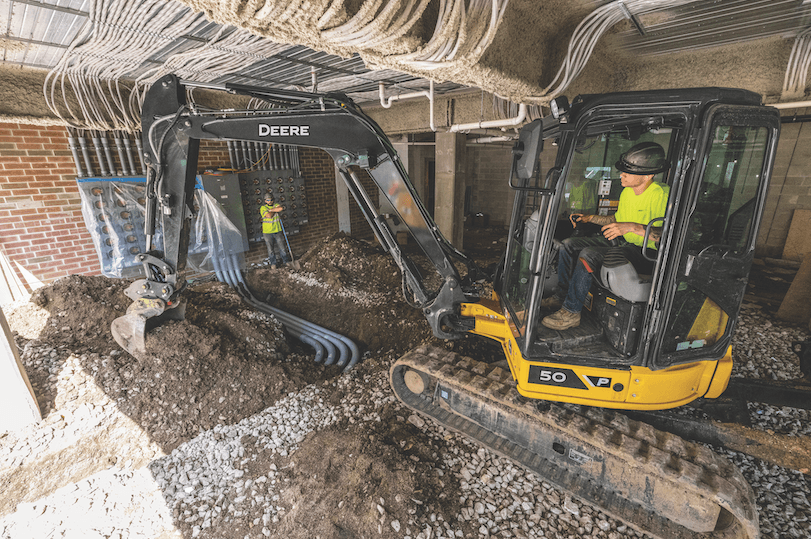
Mini Excavators (e.g., 35 P-Tier) | $$ | Precision digging with lower transport fees. |
Backhoe Loaders (e.g., 310 P-Tier) | $$$ | High value due to "two-in-one" (Loader/Excavator) capability. |
Full-Size Excavators (e.g., 200G) | Higher rates due to weight, fuel consumption, and transport needs. | |
Bulldozers (e.g., 700 series) | $ | Highest rates due to track wear costs and raw pushing power. |
3. The "Hidden" Value Factors
Beyond the base rate, several factors can influence the final cost. At 4Rivers, we focus on helping you use these to reduce your total project spend:
- Technology Integration: Adding John Deere SmartGrade™ or Grade Guidance to a rental might increase the daily rate, but it can cut your labor hours by 50% by ensuring you hit the grade on the first pass.
- Attachment Versatility: Renting a specialized attachment, like a hydraulic breaker or an FAE Mulcher, transforms a standard machine into a specialized tool, eliminating the need to rent a second piece of equipment.
- Logistics & Delivery: Distance matters. Because 4Rivers has 13+ locations across the Southwest, we can often source a machine from a branch closer to your jobsite, reducing transportation fees.
4. Why Renting from an "Onyx Circle" Dealer Matters
As a 9-time John Deere Onyx Circle Award winner, our rental rates include a level of support you won't find at a general rental yard:
- Uptime Guarantee: Our rental fleet undergoes "Onyx-level" multi-point inspections. You aren't just paying for the machine; you're paying for the assurance it won't break down.
- JDLink™ Monitoring: We monitor your rental's health and fuel levels remotely. If a fault code appears, we often know before you do.
- Tech Support: Field technicians like Devin Ramseyer (Territory Tech of the Year) are on standby to ensure your rental stays productive.
5. Managing Your Budget (FAQ)
Can I get a discount for long-term rentals?
Yes. Monthly rates are the standard "volume discount," but for multi-month infrastructure projects, we can discuss custom long-term agreements with guaranteed maintenance.
Does 4Rivers offer "Rental Purchase Options" (RPO)?
Absolutely. If you realize mid-project that you need the machine permanently, a portion of your rental payments can be applied toward the purchase price.
Is there a "Zero-Zilch-Nada" promotion for rentals?
Through May 31, 2026, you can use a John Deere PowerPlan™ account to manage rental-related costs (like parts or specialized attachments) with 150 Days of No Payments / No Interest.
What is the "Physical Damage Waiver" (PDW)?
This is a small daily fee that limits your financial liability if the machine is accidentally damaged on your jobsite. It provides peace of mind and protects your company's primary insurance.
Get a "Right-Sized" Quote. Contact your local 4Rivers Equipment branch today. We don't just provide a price; we provide a plan to help you hit your deadline under budget.