
Do Skid Steers Get Stuck Easily?
Traction and Terrains: Do Skid Steers Get Stuck Easily?
A skid steer is only as effective as its ability to stay mobile. While these machines are the "Swiss Army Knives" of the jobsite, their mobility depends heavily on the configuration you choose for your specific environment. Understanding the physics of ground pressure and traction is the best way to prevent your project from grinding to a halt.
The Physics of Ground Pressure: Tires vs. Tracks
Whether a machine gets "stuck" often comes down to Ground Pressure, measured in Pounds per Square Inch (PSI).
1. Wheeled Skid Steers (High PSI)
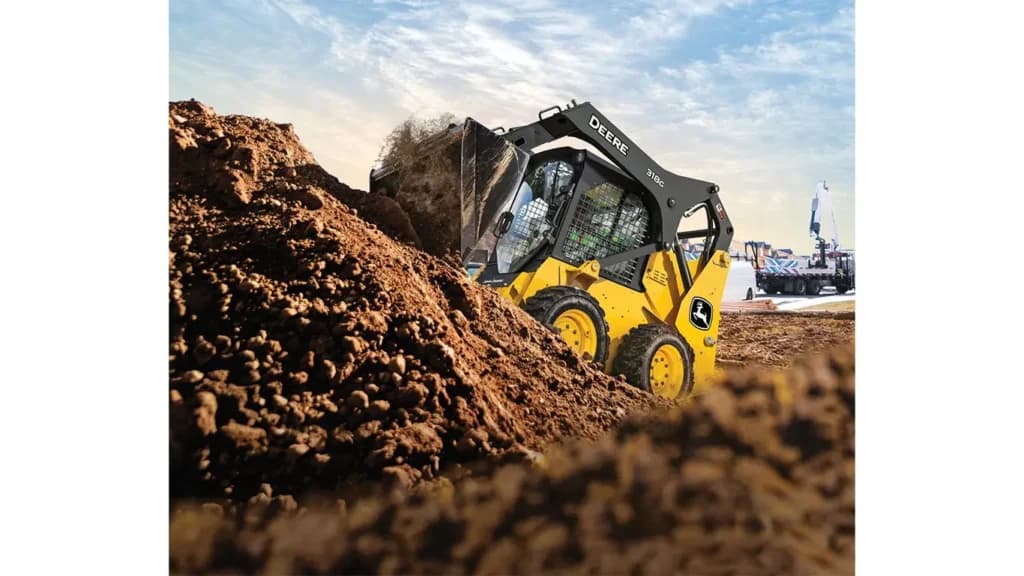
Wheeled models concentrate the entire weight of the machine and its load onto four small contact patches.
- Pros: Faster travel speeds, lower operating costs on hard surfaces, and better "digging" power on hard ground where you want the tires to bite.
- Cons: In soft mud or sand, high PSI causes the tires to act like drills, digging into the earth rather than rolling over it.
2. Compact Track Loaders (Low PSI)
Tracked models distribute weight across a much larger surface area.
- Pros: "Flotation." A tracked machine might have a ground pressure of only 4–5 PSI—less than a human footprint. This allows them to stay on top of mud, snow, or soft landscaping.
- Cons: Tracks are more expensive to maintain and can be damaged by abrasive materials like jagged rock or demolition debris.
Why Skid Steers Get Stuck (and How to Avoid It)
Saturated Soil & "The Bowl Effect"
Skid steers use a "skid" steering mechanism. To turn, one side’s wheels/tracks must slide across the ground. In wet clay or deep mud, this scrubbing action can create a "bowl" under the machine, causing it to bottom out on its frame (high-centering).
- Prevention: When working in soft conditions, make wide, gradual turns rather than sharp pivots to maintain the integrity of the ground beneath you.
Improper Weight Distribution
A skid steer's center of gravity shifts significantly based on the load in the bucket.
- Prevention: Always carry loads low and close to the machine. Carrying a heavy load high in soft ground increases the downward force on the front wheels/tracks, significantly increasing your risk of sinking.
Loss of Momentum
Physics dictates that it takes more energy to start moving than to keep moving.
- Prevention: If you feel the machine beginning to bog down, do not stop. Try to maintain a steady, slow momentum while backing out of the soft area in a straight line.
Leveraging John Deere Technology to Stay Mobile
At 4Rivers Equipment, we provide John Deere machines equipped with features specifically designed to handle the unpredictable terrains of Colorado, New Mexico, and Texas.
- Creep Mode: Allows you to maintain a very slow, consistent travel speed while keeping your hydraulic attachment (like a snow blower or trencher) at full power. This prevents the "spinning" that often leads to getting stuck.
- Anti-Stall Technology: Automatically senses the load and adjusts the engine speed to prevent the machine from dying in deep mud or heavy snow.
- EH (Electro-Hydraulic) Controls: Allow you to customize the "Aggressiveness" of your steering. In slick conditions, you can dial back the sensitivity to prevent losing traction during turns.
Common Questions About Getting Unstuck (FAQ)
What should I do if I get stuck?
Stop spinning the wheels/tracks immediately. Spinning only makes the hole deeper and can damage the machine. Use your bucket to push the machine backward while slowly engaging the drive. If you are "high-centered" (the belly of the machine is on the ground), you may need a second machine to pull you out.
Can I put over-the-tire (OTT) tracks on my wheeled skid steer?
Yes! 4Rivers offers OTT track systems that can be installed over your existing tires. This is a great middle-ground solution for seasonal mud without the full cost of a dedicated tracked machine.
Does tire tread pattern matter?
Absolutely. "Button" or "Block" treads are great for pavement, but for mud, you want an "R4" Deep Lug tire that can self-clean. If the tread is packed with mud, it essentially becomes a smooth "slick," and you will lose all traction.
Can 4Rivers help me choose the right track type?
Yes. We offer several track patterns, from "Zig-Zag" for maximum traction in snow to "Multi-Bar" for a smoother ride on hard surfaces. Our parts and sales teams can evaluate your primary jobsite to find the best fit.
Don't let the mud slow you down. [Contact your local 4Rivers Equipment branch] to demo a John Deere Compact Track Loader or to talk to our service pros about the best tires for your specific terrain.