
Bulldozer vs. Tractor
Bulldozer vs. Tractor: Finding Your Working Partner
When you’re standing on a site and looking at a lineup of heavy equipment, it’s easy to see why bulldozers and tractors are sometimes confused. They both command a lot of ground, deliver impressive torque, and are staples of any 4Rivers fleet. However, at 4Rivers Equipment, we know that choosing between the two is the difference between "pushing the earth" and "powering the task."
As we celebrate our Centennial in 2026, our goal remains to help you match the right iron to your specific mission so you can maximize your uptime and protect your bottom line.
1. The Bulldozer: The Power of the Push
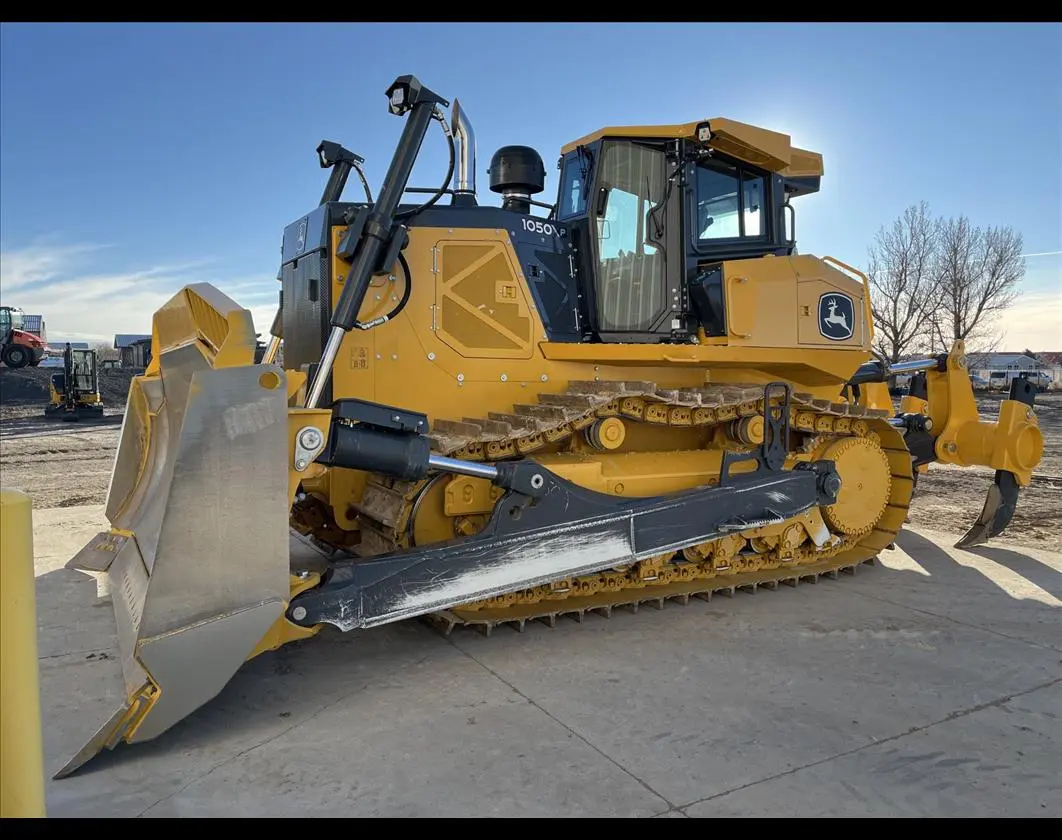
A bulldozer is a specialist. Its entire engineering—from its heavy-duty tracks to its massive front blade—is designed for one thing: tractive effort.
- Earthmoving Power: A dozer's job is to put power to the ground. Whether you're clearing brush in northern New Mexico or leveling a pad for a new warehouse in Fort Collins, the dozer uses its weight and traction to move material forward.
- Tracked Stability: Unlike most tractors, dozers almost exclusively use tracks. This gives them a lower ground pressure, allowing them to work in mud or on steep slopes where a wheeled machine would get stuck.
- Precision Grading: With technology like John Deere SmartGrade™, a dozer is no longer just a blunt instrument. It can now grade a site to within millimeters of a digital 3D plan on the first pass.
2. The Tractor: The Master of Versatility
If the bulldozer is a specialist, the tractor is the "Swiss Army Knife" of the industry. Its design is centered around modularity and the ability to power other tools.
- Pulling & Powering: A tractor’s primary feature is its Hitch and Power Take-Off (PTO). This allows it to tow heavy tillage tools, power mowers, or operate specialized implements like the scraper used in Fiore & Sons' ReLife project.
- Wheeled Mobility: Most tractors are wheeled, making them much faster and more "road-friendly" than dozers. You can drive a John Deere 6R or 8R series tractor from the farm to the jobsite without needing a trailer.
- Adaptability: One tractor can be a mower in the morning, a loader in the afternoon, and a snowblower in the evening just by swapping attachments.
3. Key Differences at a Glance
Feature | Bulldozer | Tractor |
Primary Action | Pushing material forward | Pulling or powering implements |
Drive System | Mostly Tracks (High traction) | Mostly Wheels (High mobility) |
Main Tool | Front-mounted Blade | Rear Hitch / PTO / 3-Point Linkage |
Best For | Site prep, grading, land clearing | Farming, property maintenance, towing |
Specialization | Highly specialized earthmover | Multi-purpose utility machine |
4. Which One Do You Need?
Choosing the right machine depends on your project's "Life Cycle."
- Choose a John Deere Bulldozer if... you are transforming the landscape. If the goal is to move 5,000 yards of dirt or clear a rugged, rocky site, a 700 or 850 P-Tier dozer is the only machine for the job.
- Choose a John Deere Tractor if... your tasks change every day. If you need to maintain a large property, pull a scraper, or manage a ranch, the versatility of a tractor provides a better Return on Investment (ROI).
5. The 4Rivers Support Advantage
Whether you choose a tracked powerhouse or a wheeled workhorse, 4Rivers Equipment provides the support to keep it running for the next 100 years:
- Zero-Zilch-Nada: Through May 31, 2026, take advantage of 150 Days of No Payments / No Interest on parts and service for either machine.
- Onyx-Level Service: As a 9-time Onyx Circle Award winner, our technicians are factory-trained to handle the complex hydraulics of a dozer and the advanced PTO systems of a tractor.
- Foursight Solutions: Our technology team can help you integrate JDLink™ on your tractor or SmartGrade™ on your dozer to monitor health and productivity from your phone.
Common Questions (FAQ)
Can I put a blade on a tractor and use it as a dozer?
You can, but it’s not the same. A tractor’s frame and tires aren't designed to handle the massive, constant "shoving" forces that a bulldozer’s chassis and tracks are built for. You risk damaging the tractor’s transmission and axles.
Which machine is better for snow removal?
For residential or light commercial work, a tractor with a blade or blower is faster and more maneuverable. For heavy, deep snow or clearing large unpaved lots, a bulldozer’s traction is superior.
Does 4Rivers rent both?
Absolutely. We have a massive fleet of John Deere dozers and utility tractors available 4Rent. If you’re not sure which fits your job, you can even use a Rental-Purchase Option (RPO) to try one out before you buy.
Don't overbuy or underperform. Contact your local 4Rivers Equipment branch today to speak with an expert who can help you size the right machine for your workload.
4Rivers Equipment Bulldozer vs Tractor
This video highlights the extensive rental fleet available at 4Rivers Equipment, showcasing the variety of John Deere dozers and other machinery ready to tackle your next earthmoving or utility project.