
Backhoe vs. Bulldozer
Backhoe vs. Bulldozer: Choosing the Right "Working Partner"
In the heavy equipment world, the backhoe and the bulldozer are often viewed as the "utility players" and the "powerhouses," respectively. While both are essential for earthmoving, they operate on completely different mechanical principles. At 4Rivers Equipment, we see these machines as complementary rather than competing—choosing the right one depends on whether your project requires precision and versatility or raw pushing force.
1. The Backhoe: The Ultimate Multi-Tasker
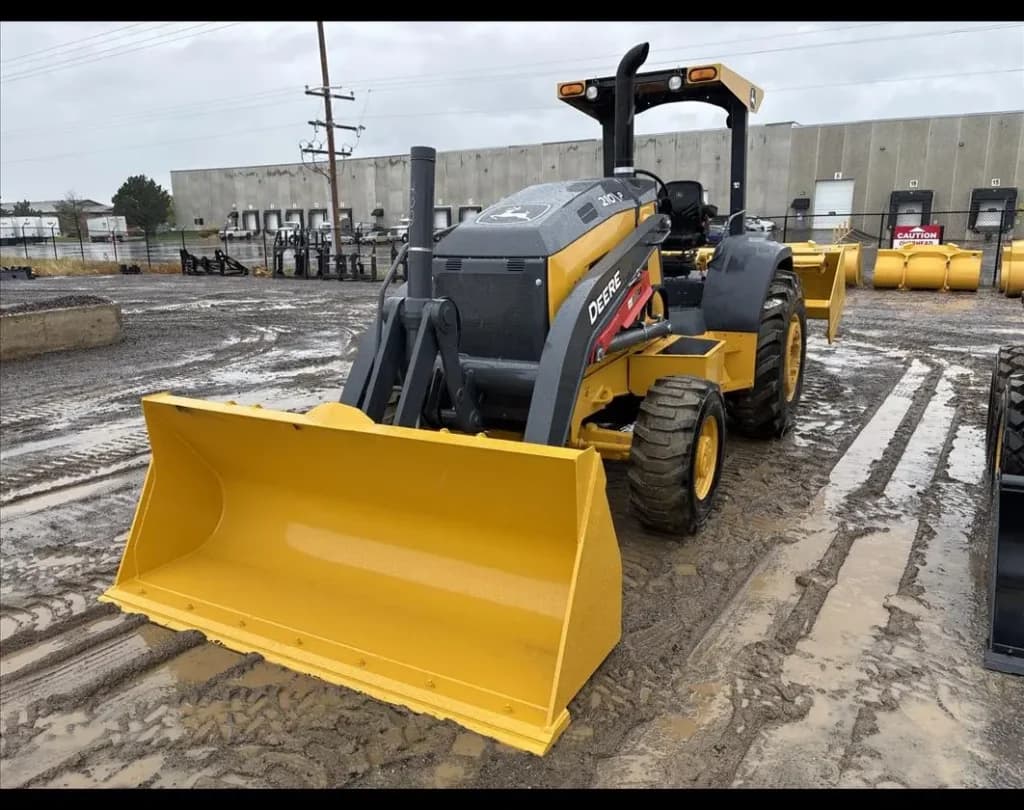
A backhoe loader is essentially three machines in one: a tractor, a loader, and an excavator. Its design is centered on agility and the ability to perform vertical tasks.
- The Two-Sided Advantage: With a loader bucket on the front and a digging arm on the rear, the operator can switch from trenching to loading a truck simply by rotating the seat.
- Mobility: Because backhoes like the John Deere 310 P-Tier are wheeled, they can travel over pavement without damaging the surface. This makes them the preferred choice for municipal utility work and residential landscaping.
- Stabilizers: To dig effectively, backhoes use "outriggers" or stabilizers to lift the wheels off the ground, providing a solid platform for the digging arm to work.
2. The Bulldozer: The Master of Terrain
If the backhoe is a Swiss Army knife, the bulldozer is a high-powered plow. It is engineered for horizontal force—putting maximum power to the ground to move material from Point A to Point B.
- Tractive Effort: Mounted on heavy-duty tracks, dozers have a massive "footprint." This allows them to float over soft mud or climb steep, rocky inclines where a wheeled backhoe would lose traction.
- Blade Technology: The front blade isn't just for pushing; it's for precision grading. Modern John Deere 650 and 750 series dozers often utilize SmartGrade™ technology, allowing the blade to automatically adjust its height and tilt to match a digital 3D site plan.
- The Ripper: Many dozers feature a rear-mounted "ripper"—a heavy claw used to break up frozen ground (like the four feet of frost Richard Broders encountered) or compacted rock before the blade moves it.
3. Comparison at a Glance
Feature | Backhoe Loader | Bulldozer |
Drive System | Wheeled (usually 4WD) | Tracked (Steel or Rubber) |
Primary Tool | Rear Digging Arm / Front Bucket | Large Front Blade |
Best For | Trenching, utility work, lifting | Land clearing, grading, leveling |
Ground Pressure | High (concentrated on tires) | Low (distributed across tracks) |
Jobsite Size | Small to Mid-sized / Tight spaces | Large-scale site prep / Open terrain |
4. Which Machine Fits Your Margin?
Choosing between these two often comes down to the "life of the project."
- Choose a John Deere Backhoe if... you are a "one-man operation" like Jeff Lawrence. A backhoe can dig the trench, lay the pipe, and backfill the hole all with one operator and one machine. It is the most cost-effective way to handle multiple small tasks.
- Choose a John Deere Bulldozer if... you are transforming the landscape. If you need to clear five acres of brush or level a building pad to a 1% grade, a bulldozer will do the work of three backhoes in half the time.
5. The 4Rivers Support Advantage
Regardless of which machine you choose, 4Rivers Equipment ensures your investment is protected. As we celebrate our 100th Anniversary in 2026, we offer the support infrastructure to keep both backhoes and dozers running at peak performance:
- Onyx-Level Service: Our technicians are trained to handle everything from the complex hydraulic valves of a backhoe to the undercarriage maintenance of a tracked dozer.
- Parts for Every Era: Whether you have a brand-new P-Tier model or a legacy machine like Richard Broders’ 1983 410, we have the parts network to ensure uptime.
- Technology Integration: We can help you outfit your backhoe with Grade Guidance or your dozer with SmartGrade™ to ensure you are doing the job "right the first time."
Common Questions (FAQ)
Can a backhoe do grading?
Yes, but it is "rough grading." While a skilled operator can use the front bucket to level a small area, it lacks the stability and blade control of a bulldozer for professional-grade finishes.
Why are backhoes usually on wheels?
Wheels allow the machine to move quickly between jobsites (up to 25 mph) and work on existing infrastructure without tearing up the road. For swampy or extremely soft conditions, "crawler backhoes" exist, but they are less common than the standard wheeled loader.
What is "Zero-Zilch-Nada"?
It is our current promotion through May 31, 2026, offering 150 Days of No Payments / No Interest on parts, service, and technology. This is a great way to manage costs whether you are maintaining a dozer or a backhoe.
Matching the iron to the intent is the key to profitability. [Contact your local 4Rivers Equipment branch] to demo a John Deere backhoe or bulldozer today.
EXPERT GUIDE FOLLOW-UP
Would you like a Total Cost of Ownership (TCO) Comparison between a mid-sized backhoe and a small dozer, or are you interested in a Rental-Purchase Option (RPO) so you can test both machines on your current jobsite?