
How AI Object Detection Is Improving Construction Site Safety – The FourCast Ep.4
How AI Object Detection Is Improving Construction Site Safety
Job site safety isn’t optional—it’s the difference between staying productive and dealing with costly downtime. That’s why more contractors are turning to AI-powered solutions like the Third Eye Robotics Object Detection System.
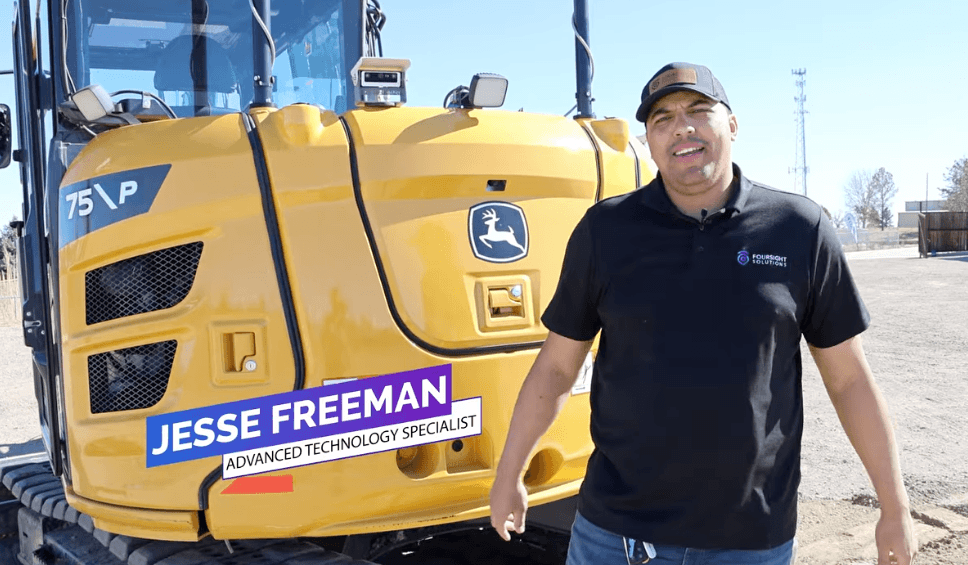
In a recent FourCast episode, we partnered with Jesse Freeman, Advanced Technology Specialist at Foursight Solutions, to walk through how this system works on a John Deere 75P excavator.
From our experience supporting fleets across construction and heavy civil, the biggest safety risks often come down to visibility. Blind spots, changing job site conditions, and operator fatigue all add up. AI helps fill those gaps.
What Does the Third Eye Robotics System Actually Do?
At its core, this system acts like an extra set of eyes on your machine—ones that never get tired.
Key Capabilities Include:
- AI-powered object detection: Identifies people, vehicles, and obstacles in real time
- Proximity alerts: Notifies operators when something enters a defined hazard zone
- Custom safety zones: Set danger or warning areas based on your job site layout
- Multi-camera support: Monitor up to four camera angles for full coverage
- Cloud-based reporting: Track incidents, near-misses, and trends across your fleet
Unlike basic camera systems, this platform doesn’t just record—it actively interprets what’s happening on your job site.
How Does AI Object Detection Help Reduce Downtime?
Safety and uptime go hand in hand. Every avoided incident is time and money saved.
From what our team sees in the field, fleets using AI safety systems benefit from:
- Fewer job site accidents → Less unplanned downtime
- Improved operator confidence → Faster, more efficient work cycles
- Better training insights → Use near-miss data to coach operators
- Reduced liability exposure → Documented safety reporting
The system’s ability to track near-misses and close calls is a game-changer. Instead of reacting after an incident, you can proactively fix risks before they escalate.
Can This Work on Your Existing Equipment?
One of the biggest advantages is flexibility.
The system can be installed on:
- Excavators (like the John Deere 75P)
- Dozers
- Wheel loaders
- Haul trucks
- Scrapers
- Virtually any mixed fleet equipment
It’s an aftermarket solution, which means you don’t have to replace machines to upgrade your safety capabilities.
At 4Rivers Equipment, we work closely with customers to integrate technology like this into existing fleets without disrupting operations.
How Does This Technology Help Operators in the Cab?
Operators already have a lot to manage—grade control, machine performance, job site coordination. This system simplifies one critical piece: situational awareness.
In-cab benefits include:
- Real-time visual alerts on a Samsung tablet interface
- Audible warnings when hazards enter detection zones
- Increased confidence when working in tight or busy environments
In our experience, adoption happens quickly because the interface is intuitive and doesn’t overload the operator with information.
How Does This Help Safety Managers and Fleet Owners?
AI safety systems don’t stop at the cab—they extend across your entire operation.
Fleet-level advantages:
- Centralized reporting dashboards
- Trend tracking across multiple jobsites
- Custom safety benchmarks and goals
- Data-backed decision-making
For companies managing multiple crews, this visibility is critical. You’re not guessing where risks are—you can actually see them.
Is AI Safety Technology Worth the Investment?
If you’re weighing cost vs. value, it helps to think beyond equipment.
Ask yourself:
- What does one job site incident cost your operation?
- How much downtime can you afford during peak season?
- How confident are your operators in high-risk environments?
From what we’ve seen working with contractors across Colorado and beyond, the ROI shows up quickly—not just financially, but in peace of mind for crews and managers.
Who Benefits Most from AI Object Detection Systems?
This technology is a strong fit for:
- Construction companies
- Heavy civil contractors
- Excavation crews
- Aggregate and mining operations
- Infrastructure and roadwork teams
- Fleet and safety managers
If your operation involves people and machines working in close proximity, AI detection can make a measurable difference.
Common Questions About AI Construction Safety Systems
What types of objects can the system detect?
The Third Eye Robotics platform can identify people, vehicles, cones, barriers, dumpsters, utility structures, and custom job site hazards.
Does the system work in all weather conditions?
Yes, multi-camera systems are designed to perform in a range of environments, though visibility may vary depending on extreme conditions.
How difficult is installation?
It’s designed as an aftermarket solution, meaning it can be installed on most machines without major modifications.
Can I monitor multiple machines at once?
Yes, cloud-based reporting allows fleet managers to track safety performance across multiple pieces of equipment and job sites.
Will this replace operator awareness?
No—this system is designed to enhance, not replace, operator awareness by providing additional real-time information.
Bringing Smarter Safety to Your Job Site
At 4Rivers Equipment, we’ve spent decades helping customers get more out of their machines—whether that’s uptime, performance, or safety.
AI-powered systems like Third Eye Robotics are the next step in that evolution. They’re practical, adaptable, and built to solve real challenges crews face every day.
If you’re looking to improve safety without slowing down production, this is a solution worth exploring. Contact Foursight Solutions for more information!